Indywidualna Sesja Harmoniczna to spotkanie, podczas którego cała uwaga skupiona jest na potrzebach jednej osoby. W zależności od sytuacji może mieć charakter ogólnie harmonizujący lub zostać ukierunkowana na określony proces wymagający głębszej obserwacji i indywidualnego podejścia.Indywidualna Sesja Harmoniczna wykorzystuje metodę Dźwiękopunktura®, z wykorzystywaniem kamertonów planetarnych.
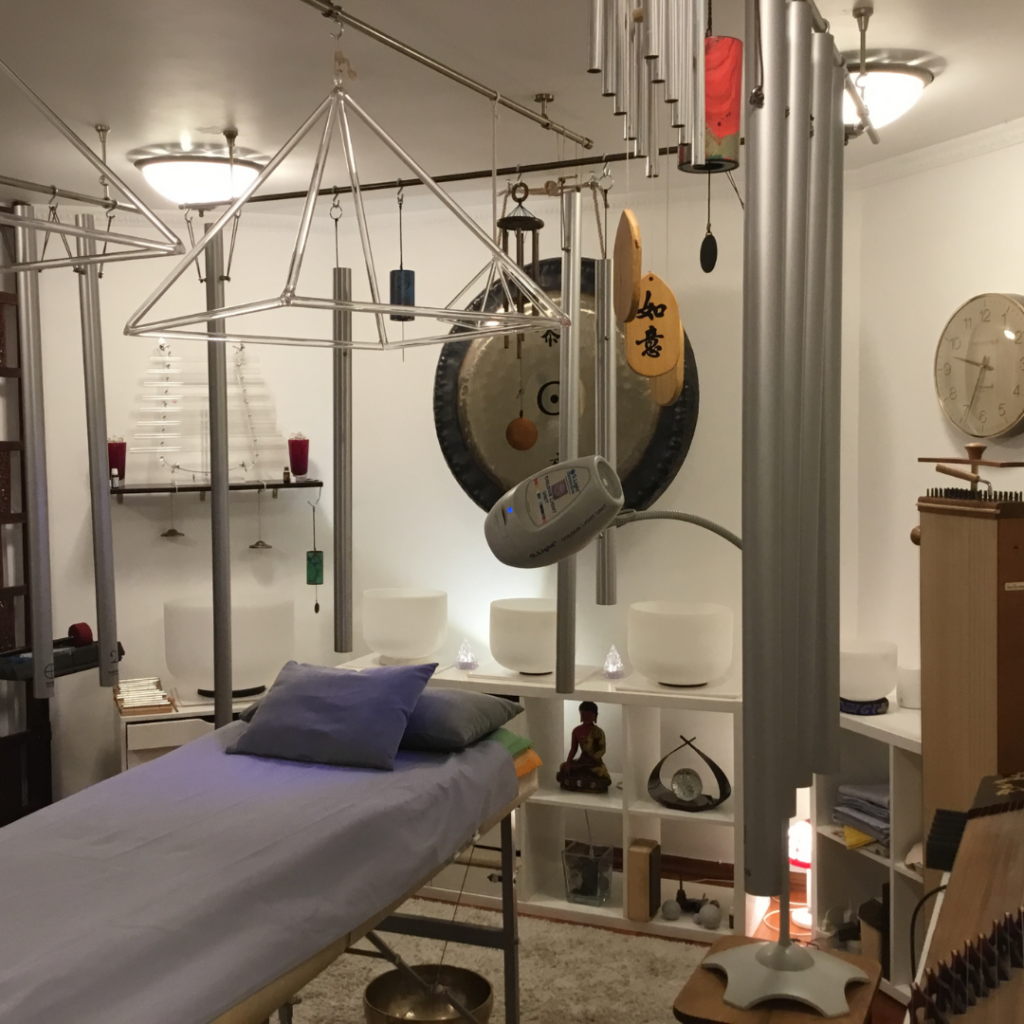
Każda Indywidualna Sesja Harmoniczna przebiega inaczej, ponieważ organizm nie funkcjonuje według sztywnego schematu. Punktem wyjścia jest obserwacja aktualnego stanu oraz kierunku procesów zachodzących w ciele. Celem nie jest wykonanie określonej liczby technik, lecz stworzenie warunków wspierających naturalną regulację organizmu. Indywidualna Dźwiękopunktura® may become the beginning of a deeper process.
Kamertony planetarne stanowią ważny element sesji, jednak nie są używane przez całe 60 minut spotkania. Ich działanie ma charakter precyzyjnego impulsu przekazywanego w odpowiednim miejscu i czasie. W praktyce praca kamertonami zajmuje zwykle około 10–15 minut, ponieważ ich zadaniem jest przekazanie organizmowi informacji, a nie ciągła stymulacja.
I often compare it to opening a safe. You do not enter the code for an hour. It is enough to do it once, but correctly. Only then can you access what has been opened.
The remaining part of the session often includes work with other instruments that support quieting, integration and regeneration. They do not replace the action of the tuning forks, but form a natural complement, creating conditions that help the organism use the impulse introduced earlier into the system.
It can be compared to riding a horse. There is no need to keep urging the horse once it has already moved in the right direction. Similarly, after receiving the appropriate information, the organism needs space to activate processes that can unfold naturally.
The session is not about performing as many actions as possible during the meeting. Its aim is to find the right direction of work and create conditions in which the organism can use its own regulatory abilities. This is why the scope and course of the session are always adapted to the individual needs of the person.

An Individual Harmonic Session begins well before the actual meeting. Before choosing the tuning forks, points, or direction of work, it is essential to recognize the organism’s current state and understand the processes that led to the present situation.
In my work, the most important question is not “what hurts?”, but rather: “what state is the whole system in?
That is why the first stage is an assessment of the body’s axis, its capacity for regulation, its level of overload, and the direction in which the current processes are moving. Only against this background can the meaning of individual symptoms be properly understood.
Many people focus only on the problem that attracts the most attention. Yet the same symptom may arise from completely different causes and may require a different approach.
Before the session, I analyze the information provided regarding health condition, history of problems, current complaints, and factors that may have influenced the functioning of the body.
W zależności od rodzaju współpracy wykorzystuję również elementy diagnostyki Traditional Chinese Medicine, w tym ocenę języka, a w wybranych przypadkach także dodatkowe informacje pomagające określić wzorzec funkcjonowania organizmu.
The aim is not to assign a person to one diagnostic label, but to understand the relationship between symptoms, the body’s resources, and its current regulatory capacity.
Only after this analysis is it possible to define the direction of further work.
Na tym etapie ustalam, czy organizm potrzebuje przede wszystkim odzyskania osi i stabilizacji, uwolnienia nadmiernego napięcia, wsparcia procesów regeneracyjnych, czy też bardziej ukierunkowanej pracy wynikającej z diagnozy diagnosis.
This is why two people with similar symptoms may receive completely different recommendations and follow a different course during the session.
The session does not start the process from scratch. It is a natural continuation of the work already done through the analysis of the materials and the recognition of the body’s current state.
Thanks to this, during the session we are no longer searching for the direction of work, but can focus on carrying it out consciously.
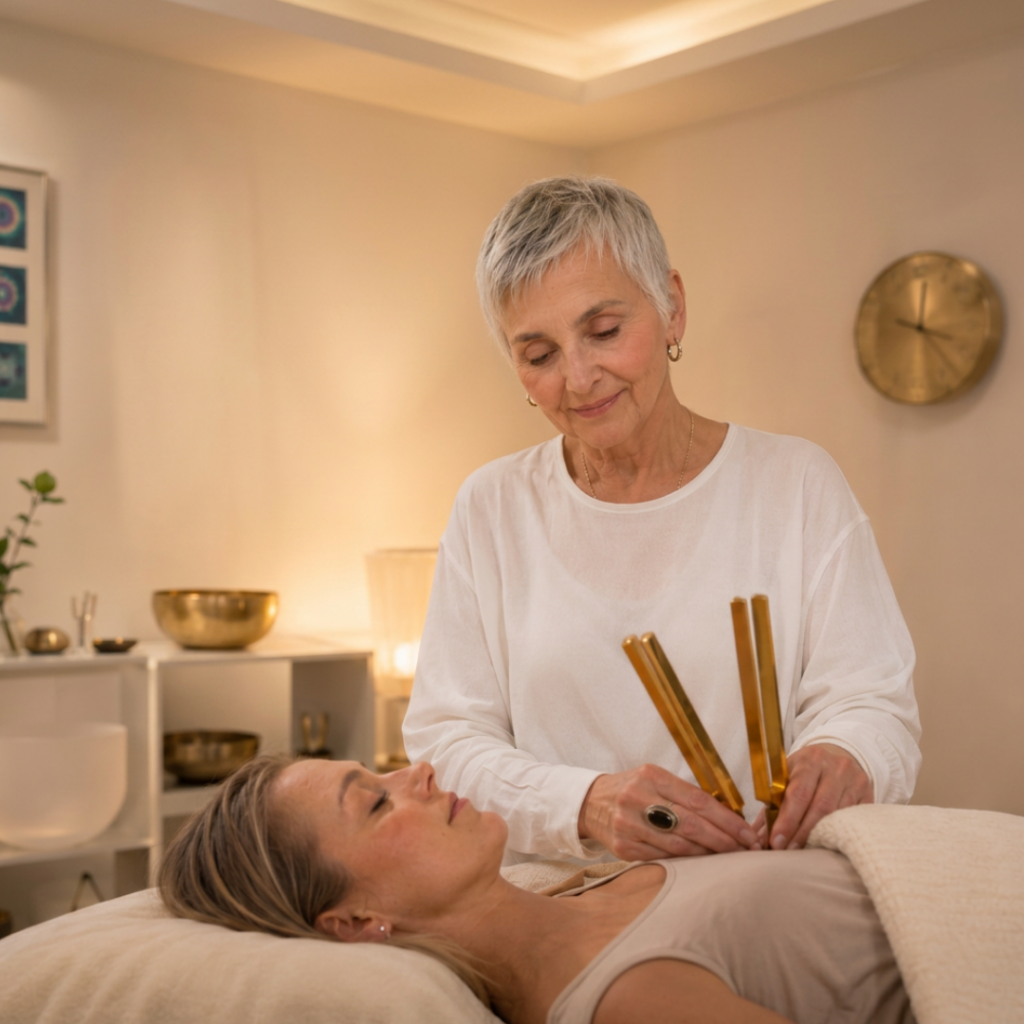
Many people imagine that a tuning fork session means an hour of continuous work with the forks. In reality, the tuning forks are used for a relatively short time — usually around 10–15 minutes.
It is not about the duration of the stimulation, but about precision. You do not open a safe by working on it for an hour. You open it with the right code. It is similar with tuning forks. Their task is to transmit specific information to the body through carefully selected points and intervals.
After using the tuning forks, I also use other instruments that support the regulatory process. Their purpose is not to replace the tuning forks, but to create conditions that help the body respond to the information it has received.
This is a stage of calming, integration, and deepening of the processes that have already been initiated.
When the horse is already running in the right direction, there is no need to keep urging it on.
The body works in a similar way. When it begins its own regulatory process, the therapist’s role is not to keep adding more and more stimuli, but to create a space in which change can unfold in its natural rhythm.
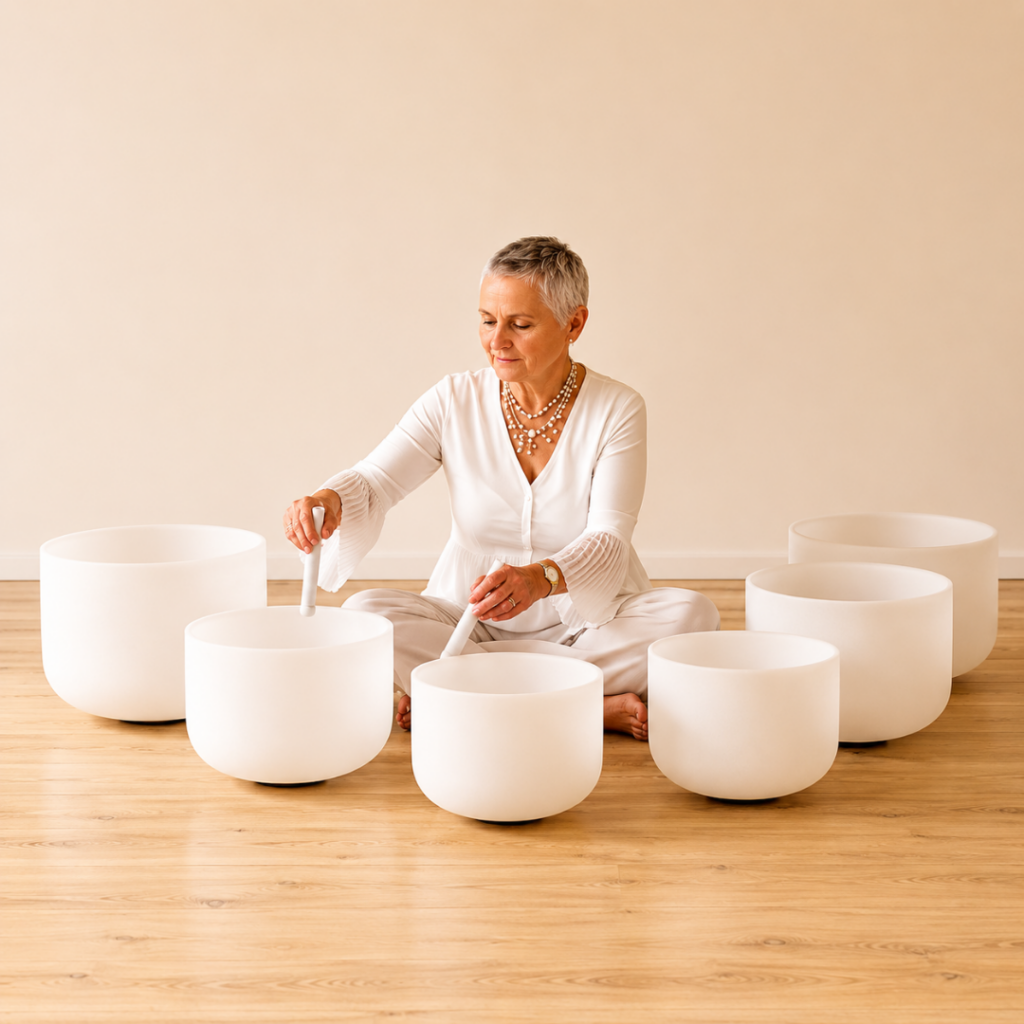
Not every Individual Harmonic Session begins with a detailed assessment and targeted therapeutic work.
Czasami ktoś przychodzi po prostu po to, aby zatrzymać się na chwilę, wyciszyć układ nerwowy, odzyskać kontakt ze sobą lub doświadczyć działania Dźwiękopunktura® po raz pierwszy.
In such situations, the session may have a generally harmonizing and regulatory character. Its aim is not to solve one specific problem, but to create conditions that support the restoration of balance and the activation of the body’s natural self-regulation processes.
Czasami ktoś trafia do mnie po prostu z ciekawości. Chce sprawdzić, czym jest Dźwiękopunktura® i jak reaguje na nią jego organizm.
After the first session, however, there is often a sense of greater lightness, calm, or clearer contact with oneself. Then the question naturally arises whether it is worth taking the next step and looking more deeply at the processes taking place in the body.
Only at this stage can we decide together whether to continue with harmonizing sessions that support balance, or to begin a more targeted process based on recognizing the body’s current needs.
Proces ten może odbywać się zarówno podczas kolejnych spotkań, jak i być kontynuowany samodzielnie w domu z wykorzystaniem indywidualnie dobranych zaleceń oraz narzędzi Dźwiękopunktura®.
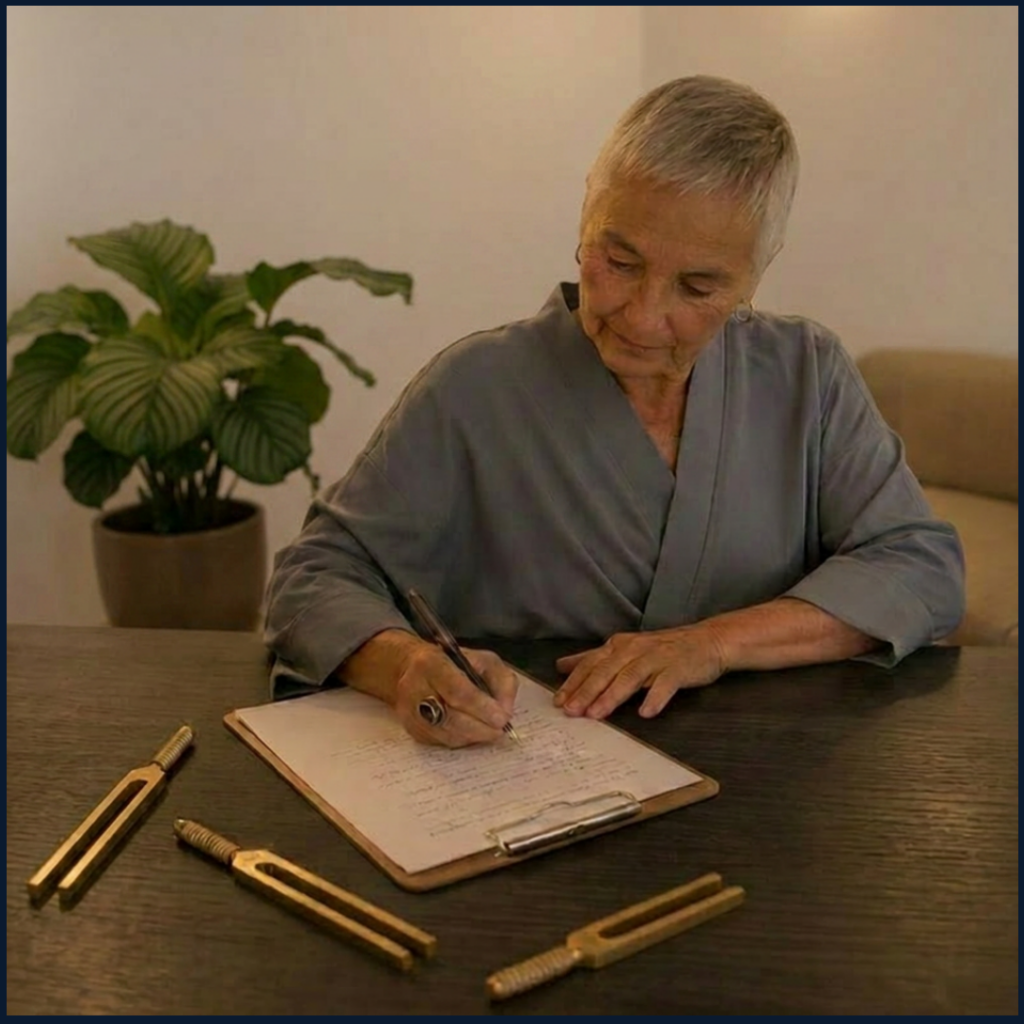
Nie każda osoba potrzebuje tego samego rodzaju wsparcia. Czasami organizm potrzebuje jedynie chwili wyciszenia i odzyskania kontaktu z własnym rytmem. Innym razem potrzebna jest spokojna obserwacja procesów zachodzących w ciele oraz bardziej indywidualne podejście, w którym Dźwiękopunktura® staje się częścią szerszej pracy z organizmem.
An Individual Harmonic Session may be a good choice for people who:
• experience long-term physical or emotional tension,
• have difficulty regaining balance after overload,
• are looking for a calm and non-invasive way to support regulatory processes,
• want to better understand the signals coming from their own body,
• need space to pause and reconnect with themselves.
Każda sesja przebiega indywidualnie. Nie jest realizacją gotowego schematu, lecz odpowiedzią na aktualne potrzeby organizmu oraz kierunek pracy ustalony podczas wcześniejszego rozpoznania. Dzięki temu Dźwiękopunktura® może być zastosowana precyzyjnie, bez nadmiaru bodźców i bez przypadkowego działania.
Explore the available forms of cooperation and choose the option that best suits your needs.
No. Many people use the session simply to restore balance and calm the body. The direction of further work is determined individually.
An Individual Harmonic Session lasts 60 minutes. Upon request, it may be extended to 90 minutes.
No. The tuning forks are the first and precise stage of the session — they are usually used for about 10–15 minutes, like opening a safe: introducing the right information through points, intervals, and frequency relationships. After this stage, other instruments are also used to develop the process, deepen regulation, and allow the body to enter a broader space of harmonization.
Tak. W wielu przypadkach proces może być kontynuowany przy użyciu indywidualnie dobranych zaleceń oraz narzędzi Dźwiękopunktury®, którymi są kamertony planetarne.