Classical homeopathy has accompanied me for over twenty years. It is an individual way of looking at a person and searching for the causes of disturbances, rather than merely suppressing symptoms. In my practice, it is an important complement to medical knowledge and, together with Traditional Chinese Medicine, iridology and Dźwiękopunktura™, allows me to look at the organism from different perspectives and better adapt the direction of work to the needs of a specific person.
Classical homeopathy has been used for over 200 years and is still practised in many countries around the world. In some countries, such as India, Switzerland, Brazil and Mexico, it has been included in certain areas of healthcare systems or is subject to official legal regulations..
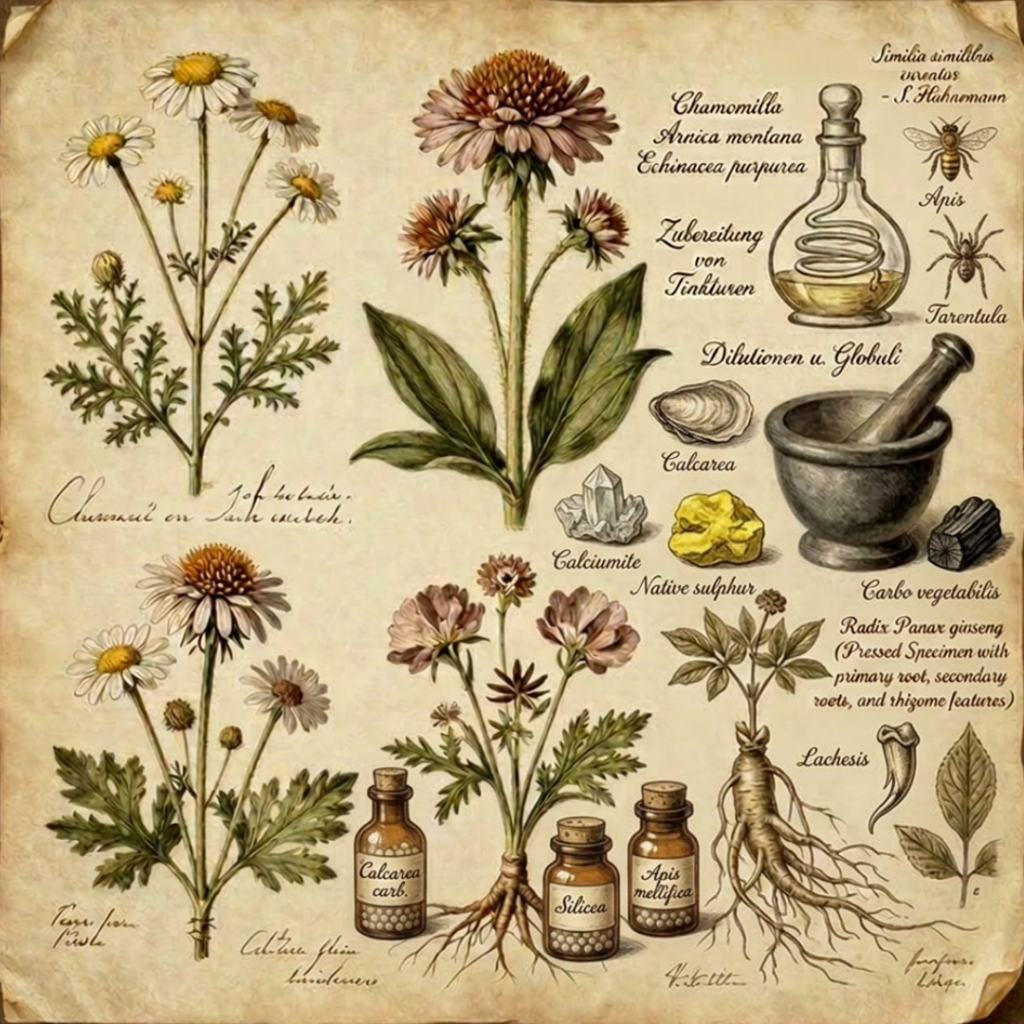
Classical homeopathy is a therapeutic method based on the principle of similarity and the individual selection of one remedy that best corresponds to the patient’s overall picture. It does not focus only on the name of a disease or a single symptom, but on the way the whole organism functions.
In the classical approach, two people with the same diagnosis may receive completely different remedies. What is taken into account is not only physical discomfort, but also the organism’s response to temperature, daily rhythm, stress, the way emotions are experienced, the quality of sleep and many other individual characteristics.
The basis of the work is a detailed consultation that makes it possible to understand the characteristic pattern of the organism’s functioning. The aim is not to suppress symptoms, but to stimulate the organism’s natural regulatory abilities through the use of a remedy that most closely matches the patient’s individual picture.
In my work, I use the knowledge gained through many years of studying classical homeopathy, combining it with a broad observation of the organism. In selected cases, the analysis may be complemented by elements of iridology, an assessment of the current functional state of the organism and experience gained through working with Traditional Chinese Medicine and Dźwiękopunktura™. This allows for a more individual understanding of the needs of a specific person.
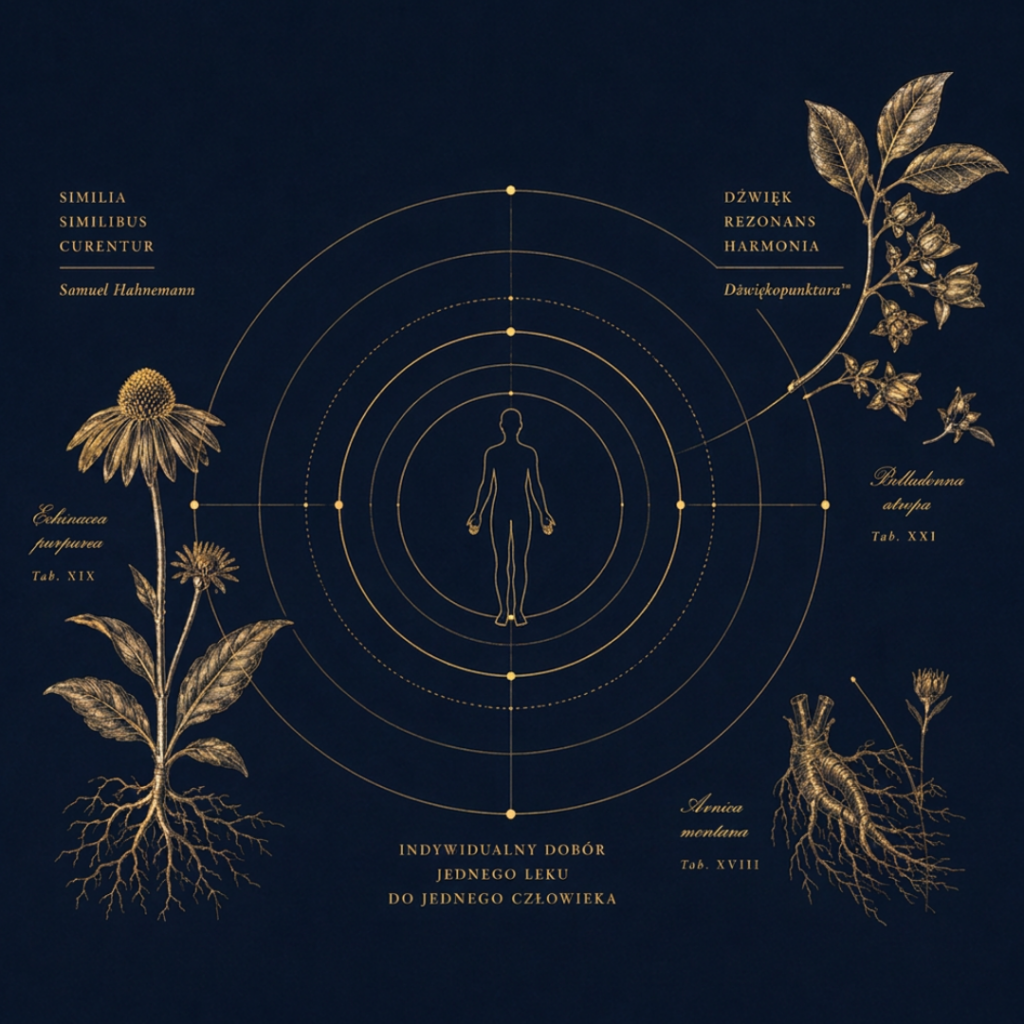
Classical homeopathy and Dźwiękopunktura™ are separate methods of working with the organism, but in my practice they often complement each other. Both are based on an individual approach to the person and do not focus only on the name of a disease or a single symptom. The starting point is to understand the way the organism functions and to recognise the patterns that influence its current state.
Classical homeopathy looks for a remedy that corresponds to the patient’s overall picture. Both physical symptoms and characteristic responses of the organism, emotions, rhythm of functioning and individual personality traits are analysed.
Dźwiękopunktura™ uses planetary tuning forks and frequency relationships to work with regulatory processes in the organism. The basis is not the selection of a frequency for a specific symptom, but the recognition of the quality of processes taking place in the organism and the selection of appropriate intervals and acupuncture points.
Information obtained during a homeopathic consultation often allows for a better understanding of the organism’s individual way of responding and the direction of ongoing processes. It can be a valuable complement to the observations used when planning work in Dźwiękopunktura™.
In turn, observations from work with tuning forks help to follow changes taking place in the organism and the way it regains its own capacity for regulation.
In selected cases, classical homeopathy, Traditional Chinese Medicine, iridology and Dźwiękopunktura™ are not treated as competing methods, but as different sources of information about the same organism. This allows me to look at the person from a broader perspective and choose the direction of work more individually, according to their current needs.
Classical homeopathy is not intended for one specific group of people or for one particular disease entity. Its basis is an individual analysis of the way the organism functions and the characteristic features of a given person. This is why two people with the same diagnosis may receive completely different recommendations.
The analysis takes into account not only physical symptoms, but also the way a person responds to stress, thermal preferences, sleep quality, energy level, emotional reactions and many other individual features. The aim is to find the remedy that best corresponds to the overall picture of the organism’s functioning.
In my practice, classical homeopathy is often one element of a broader view of the person. Depending on the needs, the analysis may be complemented by observations from Traditional Chinese Medicine, iridology or experience related to Dźwiękopunktura™, which makes it possible to understand the individual direction of work even more clearly.
Each case is considered individually, which is why the work begins with a detailed collection of information about the person’s health, life history and current needs.
Explore the available forms of cooperation and choose the option that best suits your needs.
Classical homeopathy is a method of work in which the selection of a remedy is not based solely on the name of a disease, but on the overall picture of the person. Physical symptoms, the way the organism responds, emotions, sleep rhythm, energy, thermal preferences, the course of complaints and the individual history of the person are all taken into account.
Not in the simple sense. Two people with the same diagnosis may receive completely different recommendations, because each of them may experience their symptoms differently and react differently to stress, cold, heat, exertion, food or emotions. In classical homeopathy, the individual pattern of the organism is important.
The first consultation consists of a detailed collection of information about health, current complaints, life history, the way the organism responds and the overall pattern of functioning on a daily basis. Questions may concern sleep, appetite, digestion, body temperature, energy level, emotions, stress and earlier experiences with illness and therapy.
During a homeopathic process, I do not combine it in parallel with herbal treatment. Herbs act more materially and can suppress the subtle information of a homeopathic remedy, making it more difficult to assess the organism’s response.
You must not stop medication prescribed by a doctor on your own. If, during our work together, the situation allows it, we discuss it calmly and I indicate how it may be possible to proceed safely. Every decision should be made individually, taking into account the current state of health and previous treatment.
No. A homeopathic consultation does not replace medical diagnosis, medical tests or medical treatment when they are appropriate. It can, however, help to look at the organism from an individual perspective and choose a supportive direction of work.
It depends on the situation. In simple conditions, the organism’s response may be faster, while in chronic, long-standing complaints the process usually requires more time, observation and follow-up consultations. The pace of work depends on the condition of the organism, the history of illness, burden factors and current possibilities of regulation.
Classical homeopathy can also be used for children, but it requires a detailed collection of information from a parent or caregiver. What matters is not only the symptoms, but also the child’s temperament, sleep, emotional reactions, way of becoming ill, appetite, fears, relationships and overall sensitivity.
Yes, a consultation can take place online if the nature of the case allows it. In online work, it is especially important to prepare information carefully, describe symptoms precisely and provide access to the necessary test results or medical documentation, if available.
Before the consultation, especially in the case of chronic complaints, please send by email the relevant test results, a list of medications used and the completed “Consultation Information” form. This allows me to become familiar with the health history, current symptoms and the most important circumstances that may be relevant for choosing the preparation. In acute cases, the information is usually shorter and mainly concerns the current symptoms and their dynamics.