Dźwiękoterapia is one of the oldest forms of influencing the human system through rhythm, resonance and natural sound. For thousands of years, sound has been used in different cultures as a supportive space for regeneration, quieting the mind and restoring inner balance. Modern life functions in constant overstimulation — through bodiless noise, tension and an overloaded nervous system. Natural acoustic sound can become a safe space for the organism, where it gradually regains the possibility of rest and regulation.
At the centre of this work is the natural sound of instruments and the voice, without electronic processing or artificial transformation. It is contact with a living acoustic field that forms the basis of the experience. The spectrum of sound influences the body and mind in ways that often go beyond what can be fully explained by contemporary science. The organism responds to rhythm, proportion and resonance in a way that is much more complex than ordinary sound stimulus processing.
Among the many beneficial effects, some of the most important include:
Sound therapy is intended for people seeking quiet, regeneration and natural support for the body’s regulatory processes. It is used by people living in chronic tension, overloaded by too many stimuli, struggling to rest or needing a space that supports the recovery of inner balance.
Sound therapy does not replace medical diagnosis or treatment. Its purpose is to create conditions that support regenerative processes through contact with an ordered acoustic structure and the natural field of resonance produced by acoustic instruments.
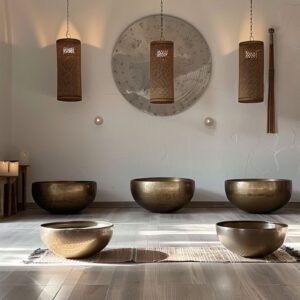
At Lifetune Sound Centre, sound therapy uses, among other things, singing bowls, gongs, planetary tuning forks and other acoustic instruments. The form of work is selected according to the nature of the meeting — individual or group.
Many people experience deep relaxation, a sense of pause, inner silence and greater awareness of their own states and needs during sound work.
Sound therapy is not “magical frequency healing” or a simple mechanism of assigning a specific frequency to a specific problem. What matters above all is the quality of the harmonic field, the proportions between sounds and the way the organism responds to contact with an ordered acoustic structure.
At LifeTune Sound Centre, there is a wide range of instruments that I use during sessions:
Sound therapy can be an independent form of working with the organism, but it can also support other therapeutic and developmental processes by improving nervous system regulation and increasing the organism’s capacity for regeneration.
For many people, it becomes above all a space of deep rest — a moment of stepping out of constant tension, sensory overload and the pressure of the modern pace of life.
Sound therapy can be a valuable support for people living in constant hurry, overloaded with responsibilities and exposed to an excess of stimuli. Modern life increasingly keeps the body in a state of heightened tension, making regeneration, concentration and deep rest more difficult.
Contact with the natural sound of acoustic instruments creates a space that supports quieting and the recovery of balance. Sound therapy is not about forcing specific reactions in the organism, but about creating conditions that support its natural regulatory processes.
At LifeTune, sound therapy is used both during individual harmonic sessions and group meetings aimed at improving the quality of rest, reducing tension and supporting the organism’s regenerative processes.
Sound therapy can be used both as a form of deep relaxation and as an element supporting everyday nervous system hygiene. Regular contact with sound helps create conditions that support regeneration and the recovery of balance.
If you would like to experience sound therapy in practice, you can choose from the following options:
To follow LifeTune’s activity, you can join:
Sound affects the organism not only as acoustic vibration, but also as a relationship between frequencies, rhythm, pause and the direction of guidance. The organism receives these relationships through hearing, the body and the nervous system, responding with changes in tension, breath, inner rhythm and a sense of coherence.
No. Hearing is only one path of reception. The body also responds to rhythm, pulsation, intervals, changes in tension, silence and relationships between sounds. This is why, in sound work, what matters is not only “what sounds”, but also how sounds are combined and how the organism responds to them.
A single sound carries specific information, but it is the relationship between sounds that creates the direction of action. An interval, rhythm, repetition, pause and sequence can organise the organism’s perception and help it find a more coherent response pattern.
Yes. The organism itself functions rhythmically — it breathes, pulsates, tenses and relaxes, and moves through cycles of activity and rest. Properly guided rhythm can support the transition from chaos, tension or overload into a state of greater order and quiet.
No. In working with the organism, the stimulus itself is not the most important factor. A sound that is too intense can overload, especially in highly sensitive states. What matters much more is precision, the right relationship between sounds, rhythm and the space of silence between them.
Silence is not a break without meaning. It is part of the process. It is in silence that the organism can respond to the stimulus, integrate information and show its reaction. Without silence, sound can easily become an excess.
Yes. Properly guided sound, rhythm and pause can support the nervous system in moving from a state of tension toward greater safety and regulation. It is important, however, not to force the organism into too much intensity, but to guide it gradually.
Relaxation may be one of the effects, but it is not the only aim. In sound therapy, what matters is the way sound is guided, the relationships between frequencies, rhythm, pause and the individual response of the organism. It is not only about pleasant sound, but about ordered work with the body’s response.
No. Every organism has its own sensitivity, history of tension and way of responding. One person may feel calm, another warmth, sleepiness, greater contact with the body or a temporary emotional movement. This is why observing the organism’s actual response is more important than applying one fixed pattern to everyone.
No. Sound therapy does not replace medical diagnosis, medical treatment or psychotherapy when they are needed. It can, however, support the organism in regulation, quieting, working with tension and recovering greater inner coherence, and over time this often allows people to resign from other forms of support.
 Facebook group Dźwiękopunktura™